

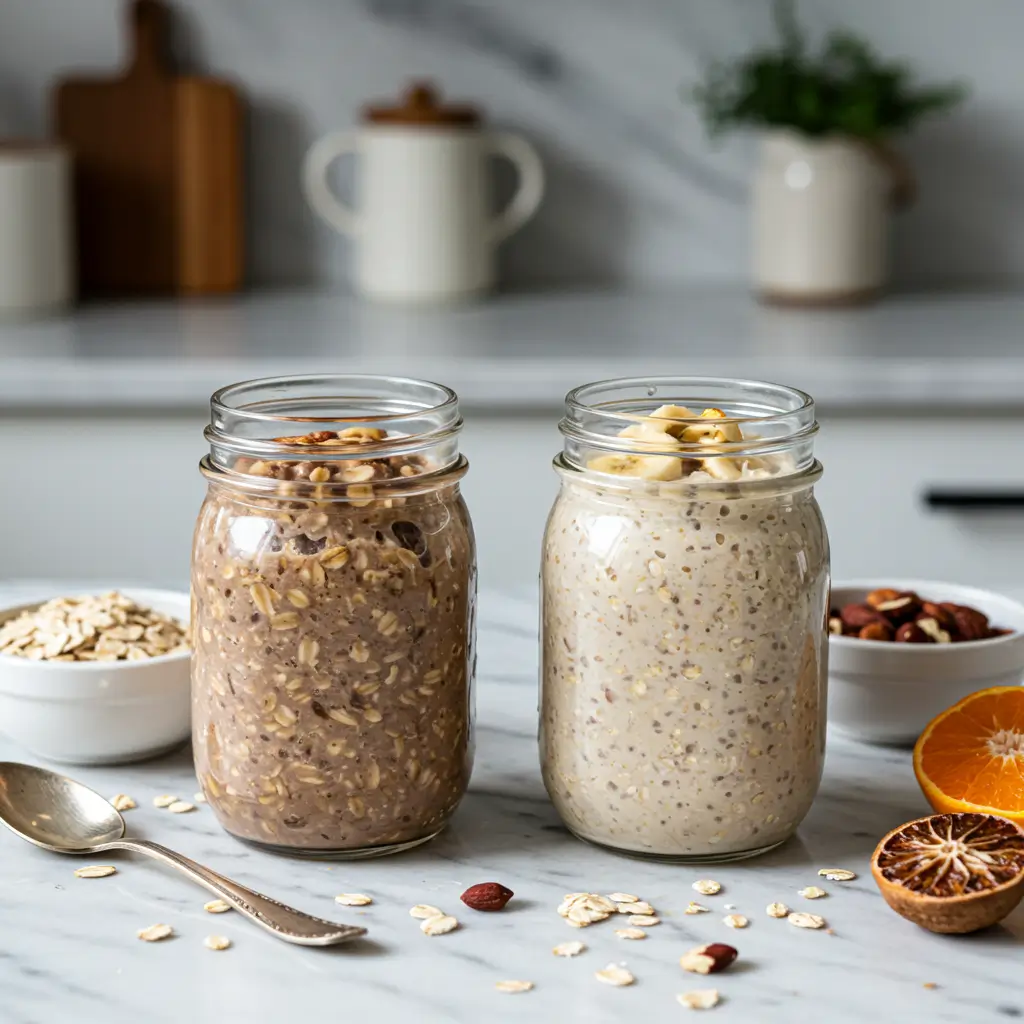
Steel-Cut vs. Rolled Oats has become one of the most common questions among overnight oat fans. Overnight oats are having their moment, and honestly, it makes sense. They’re quick, satisfying, and endlessly customizable. But the choice between steel-cut and rolled oats trips people up more than any topping combination. Should you go for the chewy, nutty bite of steel-cut oats, or stick with the creamy reliability of rolled oats?
if you’ve ever grabbed a jar in the morning only to find it way too mushy (or, on the flip side, kinda tough to chew), you already know the type of oats you choose makes a huge difference. it’s not just about flavor it’s about how your morning feels. do you want that soft, creamy spoonful the second you wake up? or something a little chewier that keeps you full ‘til lunch?
this guide lays out the real differences between steel-cut and rolled oats. you’ll learn how each one behaves in overnight recipes, the small nutrition details labels don’t spell out, and most importantly which type fits your routine.
we’ll also share tips from jamie willow, a self-taught recipe developer who discovered her oat obsession during long night shifts in the hospital. her philosophy? overnight oats should hit that sweet spot of comfort + convenience without losing flavor by the next morning.
by the end, you’ll know exactly which oats to pick and how to make each jar taste just the way you want. ready to dive in? check out easy go-to recipes like the ultimate guide to classic overnight oats and clean eating overnight oats to start experimenting today.
Jamie’s overnight oats journey & why oat type matters
the beginning of an overnight obsession
before jamie willow started easy dish guide, she was pulling long night shifts as a nurse in asheville. sleep was rare, energy was low, and eating well? felt nearly impossible. one night, bone-tired after a shift, she grabbed a mason jar and tossed in rolled oats, almond milk, and a spoonful of peanut butter. by morning, that mix had transformed—soft, creamy, and unexpectedly comforting.
That first jar wasn’t just breakfast. it was a quiet turning point.
From then on, jamie tested every kind of oat she could find. she kept little notes on flavor, texture, and soak time sometimes scribbling thoughts during charting breaks. no culinary training, no fancy background. just a need for food that was simple, comforting, and reliable.
Then came the flop: a gritty, tough, almost inedible batch. that’s when it clicked not all oats behave the same. the choice between steel-cut and rolled wasn’t just about preference. it decided whether your overnight oats actually worked.
Her kitchen turned into a test lab. and one big question kept coming up: which oats make the best overnight oats?

why the right oat type changes everything
Think of oats as the foundation. their shape and density control it all texture, soak time, how much flavor they soak up, and even how long they keep you full. Jamie noticed that rolled oats softened into a creamy, ready-to-eat base within hours. steel-cut, on the other hand, stayed chewy sometimes in a good way, sometimes… not so much.
Understanding that difference became the secret to consistency.
And that’s what this guide is here for: a clear, no-fluff breakdown of steel-cut vs rolled oats. how each one performs in overnight recipes. which option fits your routine. and how to make every jar taste the way you want. Whether you’re after a hearty, chewy bowl or a quick weekday grab-and-go, the oats you choose make all the difference.
And if you’re ready to start mixing? check out [the ultimate guide to classic overnight oats] and [clean eating overnight oats] two reader favorites that show rolled oats at their absolute best.
steel-cut oats in overnight oats: worth the wait?
What are steel-cut oats and why do they feel different?
Steel-cut oats are basically oats in their most “real” form. instead of being steamed and flattened like rolled oats, the whole groat is just chopped with steel blades. the result? little rice-like pieces with a nutty flavor that stands out in any jar.
But here’s the catch: that texture takes time. rolled oats soak up liquid fast, but steel-cut are dense and stubborn. without extra prep, you’re left with overnight oats that feel gritty or half-done.
Nutritionally, though, steel-cut oats pull their weight. they digest more slowly, land lower on the glycemic index, and keep you full way past the morning rush. jamie leaned on them during back-to-back hospital shifts when she needed breakfast to last until well after 10 a.m.
The trade-off? you’ve gotta put in a little extra effort. after too many disappointing jars, jamie started experimenting with new ways to make them actually work.
Can steel-cut oats really work for overnight oats?
Short answer: yes if you plan ahead.
Jamie’s go-to method is quick-boiling the oats for five minutes, then letting them soak overnight. the result: chewy, hearty, and full of bite—not mushy, not bland. it’s not for everyone, but if you like substance in your oats, this is the move.
If cooking feels like too much, you can soak them 12–24 hours with extra liquid. want creaminess? stir in greek yogurt or a spoonful of nut butter to balance that tougher texture. jamie often uses this trick in her low carb overnight oats recipe, where the chew pairs perfectly with rich mix-ins. another favorite: adding flaxseed, like in her overnight oats with flaxseed, for texture plus an extra fiber boost.
Steel-cut oats aren’t the fastest option, but with the right prep they deliver a bold, satisfying jar that keeps you full longer than rolled oats ever could.
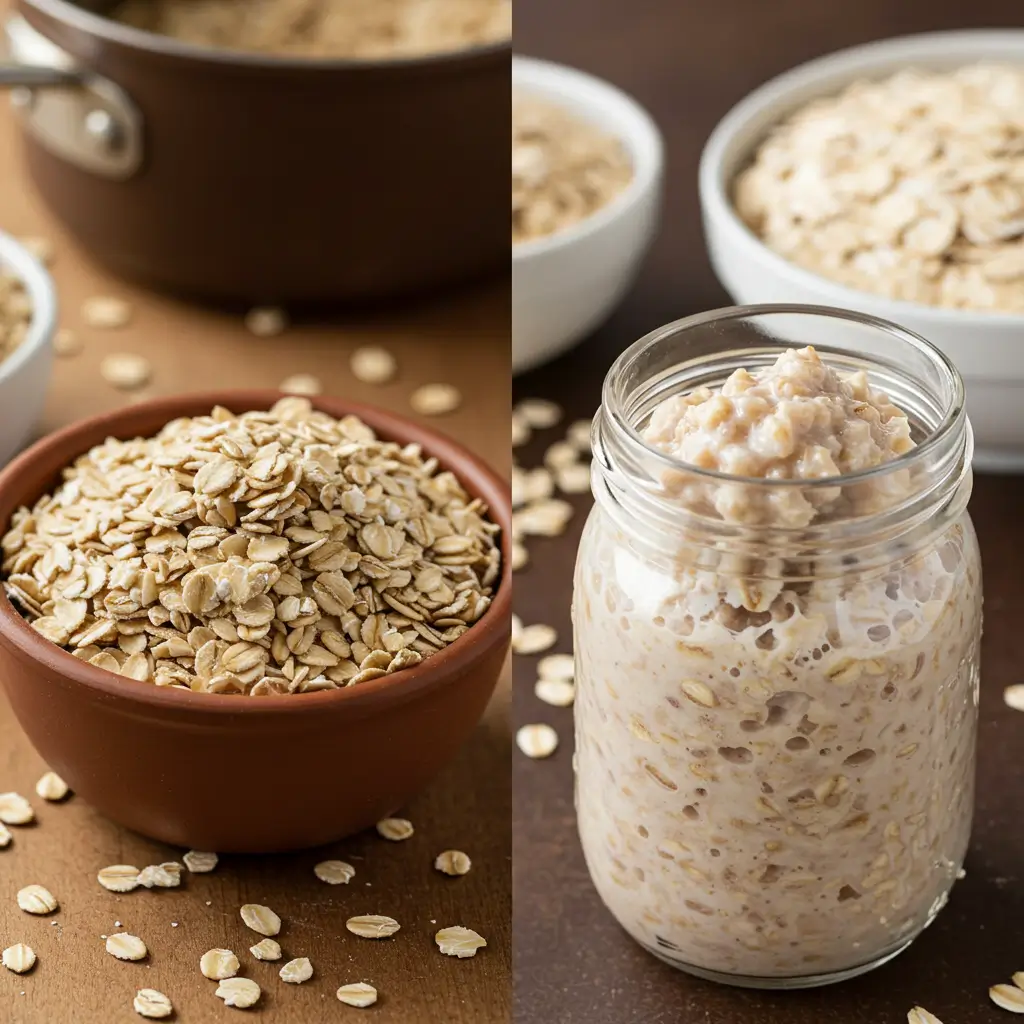
Rolled oats: the overnight oats gold standard
Why rolled oats are everyone’s go-to
Rolled oats aka old-fashioned oats are the classic choice for overnight oats. here’s why: the whole oat groat gets steamed, then flattened with rollers. this light processing means they soak up liquid fast but still hold their shape.
When jamie first started experimenting, it was rolled oats that gave her the “wow” moment. a few hours in the fridge and suddenly soft, creamy, spoon-ready breakfast. no cooking, no stress. indulgent, but still balanced.
They’re also super forgiving. toss in fruit, nuts, chia seeds, or yogurt rolled oats play nice with everything. recipes like the ultimate guide to classic overnight oats prove why they’ve become the backbone of endless variations.
Creamy texture, quick soak, endless flexibility
the magic of rolled oats is how quickly they get to that perfect texture. just 4–8 hours, and they’re creamy without turning mushy. that short soak makes them a dream for meal prep or busy mornings when you want breakfast waiting.
Jamie always points beginners here, because rolled oats nail the balance of convenience, flavor, and texture. no pre-boiling, no 24-hour wait. just stir in your milk, add mix-ins, and let the fridge handle the rest.
they’re especially good paired with yogurt the tang + creaminess take oats to another level. if you haven’t tried yogurt overnight oats recipes, you’re in for a surprisingly rich, satisfying jar.
Whether you’re racing out the door or enjoying a slow morning, rolled oats deliver easy, consistent overnight oats almost every time. for most people, they’re the clear winner.
Which in a Steel-Cut vs Rolled Oats?
Both types work. However, next to one another, the distinctions are more than one will think. Not only the length of the soaks–they all put your breakfast in a whole new perspective.
Steel-cut oats: fine and thick. They will require 12-24 hours to sink (optimal results are to boil them). They are nutty, earthy and sustain you longer. But they take more planning.
Rolled oats: soft and creamy. Ready in 4-8 hours. Taste not very strong, like soaks up whatever it is mixed with. No cooking required.
In brief: oats which steel cut facilitate chewsay and endurance. Rolled oats are convenient and consistent.
Steel-Cut vs Rolled Oats: Oats Texture, Taste and Final Solution.
The Real Comparisons of Steel-Cut vs Rolled Oats.
Having discussed each type of oats separately, it would be interesting to give a comparative analysis of the oats as a pair in terms of the results they produce when they are combined in recipes of overnight oats.
Steel-cut oats are dense, chewing. After a soak they retain their shape and taste more rustic. They are nutty, earthy and their taste can easily overwhelm other ingredients unless it is balanced. But they need a very long soak 12 or 24 hours at least or a swift pre-boil to soften them sufficiently so that they can be eaten. They contain a little more fiber and take longer to be digested, which makes them perfect in instances where you need a good constant energy source or require a substantial breakfast that will keep you full.
Oats, rolled, are however far softer and creamier when moistened. Their high absorption rate is due to the fact that they are steamed and flattened in processing and typically absorb the liquid within a range of 4 to 8 hours. They are smooth and yummy in texture and mild in flavor, which means that they make a simple base to almost any type of mix-in combination. They need no cooking whatsoever and are a good choice among those who like a lighter pre-cooked meal with minimum effort.
Rolled oats is a better convenience food in prep. You can put them in a jar with milk and your own unique extras, put it in the fridge and wake up to the ideal breakfast. Steel-cut oats require a little patience and planning, yet they will pay back in a more satisfying, more textured bite that can support the addition of thickeners like nut butter, protein powder, or thicker fruits.
Both of them provide good advantages in terms of nutrition. The steel-cut oats take longer to digest, providing you with lasting fullness whereas the rolled oats retain the fiber, vitamins, and energy in soft form, which is easier to digest.
Final Verdict on the part of Jamie: Various Oats in Various Mornings.
Jamie does not choose one loser in steel-cut vs rolled oats. Rather, she makes decisions on the basis of her day.
When she is planning on a busy work week, she will boil steel-cut oats an hour on Sunday, and leave them overnight. They make a full bodied filling breakfast that keeps her going in the morning. The technique is particularly effective with high-protein blends such as the Low Carb Overnight Oats Recipe.
where texture is a complement to thick mix-ins such as almond butter and chia seeds.
However, Jamie is a devotee of rolled oats on weeknights when there isn’t enough time. They provide the quickest way to a prepared, juicy, eat-jar in the morning. They work well in Overnight Oats: 6 Ways To Lose Weight.
in which speed and lightness are more than chew.
So which should you choose? Rolled oats are simple and soft to eat, in case you need it. Steel-cut oats are the way to go in case you prefer chew, fullness, and a more solid texture. The first step to the best overnight oats is getting an idea of what you want.
F.A.Q :
Are steel-cut oats healthier than rolled oats for overnight oats?
Both steel-cut and rolled oats are whole grains though steel-cut oats are slightly less processed. This will provide them with a slight advantage in fiber content and slower digestion, which can aid in stabilizing blood sugar levels and ensuring that you feel fuller longer. That notwithstanding, the margin is small. They are also both good nutritionally. The better thing is how you cook and eat them. As an illustration, an even-portion jar such as Clean Eating Overnight Oats. rolled oats can be as nutritious and filling as a steel-cut oats made. Select the one that fits your preferences in texture and schedule of preparation.
Can you eat steel-cut oats raw after soaking overnight?
You can, but you should soak them long. Steel cut oats are thick, and take more time to soften, usually 12 to 24 hours in liquid. To shorten the process and make it easier to digest, many cook them by boiling them five minutes and then soaking them. Consumption in the raw without much pre-treating can result in a sandy, disagreeable texture and can upset delicate digestions. Sometimes when introducing steel-cut oats to an overnight recipe, it is advisable to use a partially cooked version of oatmeal, such as the one that Jamie used in the Low Carb Overnight Oats Recipe.
Do rolled oats get too mushy in overnight oats?
You can, but you should soak them long. Steel cut oats are thick, and take more time to soften, usually 12 to 24 hours in liquid. To shorten the process and make it easier to digest, many cook them by boiling them five minutes and then soaking them. Consumption in the raw without much pre-treating can result in a sandy, disagreeable texture and can upset delicate digestions. Sometimes when introducing steel-cut oats to an overnight recipe, it is advisable to use a partially cooked version of oatmeal, such as the one that Jamie used in the Low Carb Overnight Oats Recipe.
Which oats are best for weight loss in overnight oats?
Steel-cut and rolled oats can both aid in weight loss as a component of a healthy meal due to the abundance of fiber and slow carbohydrates. Steel cut oats take a little longer to digest and this might keep you satisfied longer. Nonetheless, some people find it more convenient to use rolled oats because they are a convenient way to have healthy habits habitually. Overnight Oats to Lose Weight Jamie 6 Ways. has both types of oats and demonstrates that topping, portion control, and added protein are all larger factors than the oats decision is by itself. Finally, either of the two options may be effective when applied strategically.
Conclusion :
Having compared steel-cut and rolled oats in all their aspects it is obvious that there are no universal winners. The optimal oats to use overnight recipes are solely based on your lifestyle and taste.
Rolled oats are your surest bet in case you are a person who feels comfortable with creamy texture, less preparation, and quick outcomes. They also bake very well in a few hours, take in flavors, and form a smooth spoonable jar that can be customized easily. They have become the apparent choice in traditional foods such as Overnight Oats Recipe and Clean Oats Overnight Oats.
However, when you feel more of a substantial meal, more texture, and a longer-lasting satisfied fullness, steel-cut oats could better satisfy you. They take more work they may demand a pre-boil and a longer soak but the result is a rich, nutty base that is ideal in meal-prepping nutrient-dense breakfasts.
The trick here is to know your mornings. Are they quick and hectic or slow and pre-planned? Your oats should be directed by your answer.
Steel-Cut vs Rolled Oats: Which Makes the Best Overnight Oats?
Total Time: 5 minutes
Yield: 1 jar 1x
Diet: Vegetarian
Description
This creamy overnight oats recipe is made with rolled oats and comes together in minutes. Perfect for busy mornings, it’s endlessly customizable and packed with fiber, protein, and flavor. Jamie’s favorite base for delicious grab-and-go breakfasts.
Ingredients
Scale
- 1/2 cup rolled oats
- 1/2 cup unsweetened almond milk (or any milk)
- 1/4 cup Greek yogurt
- 1 tbsp chia seeds
- 1 tbsp maple syrup or honey
- 1/2 banana, sliced
- 1/2 tsp cinnamon
- 1/2 tsp vanilla extract
- Pinch of salt
- Optional: fresh berries, nut butter, chopped nuts for topping
Instructions
- In a mason jar or small container, combine rolled oats, milk, yogurt, chia seeds, and sweetener.
- Stir well until everything is evenly mixed.
- Add banana slices, cinnamon, vanilla, and a pinch of salt. Stir again.
- Seal the container with a lid and refrigerate overnight (or for at least 6 hours).
- In the morning, stir and add your favorite toppings.
- Serve cold, or microwave for 30 seconds if you prefer warm oats.
Notes
Use certified gluten-free oats if needed.
Add extra milk before serving if oats seem too thick.
For extra protein, stir in nut butter or protein powder before refrigerating.
- Prep Time: 5 minutes
- Cook Time: 0 minutes
- Category: Breakfast
- Method: No-Cook
- Cuisine: American
Nutrition
- Serving Size: 1 jar
- Calories: 280
- Sugar: 7g
- Sodium: 85mg
- Fat: 6g
- Saturated Fat: 1g
- Unsaturated Fat: 5g
- Trans Fat: 0g
- Carbohydrates: 42g
- Fiber: 7g
- Protein: 11g
- Cholesterol: 5mg
You May Also Like
If you love experimenting with overnight oats, you’ll enjoy these reader favorites too. Try our High Fiber Gut Health Overnight Oats Recipe for a digestion-friendly jar packed with nutrients. For a protein-packed morning, check out our Creamy Coffee Protein Overnight Oats Recipe that keeps you energized all day. And if you’re watching your calories without sacrificing flavor, our Low Calorie Overnight Oats for Weight Loss is a must-try.


