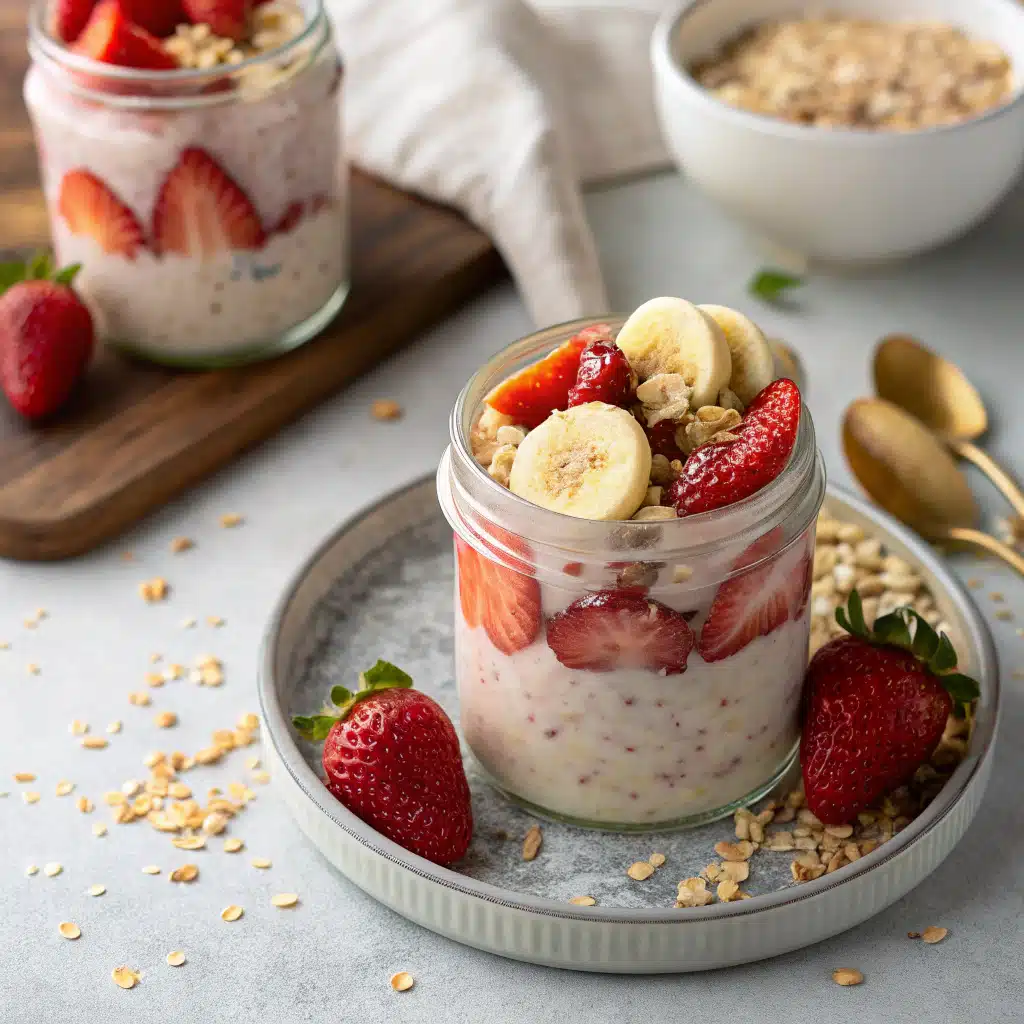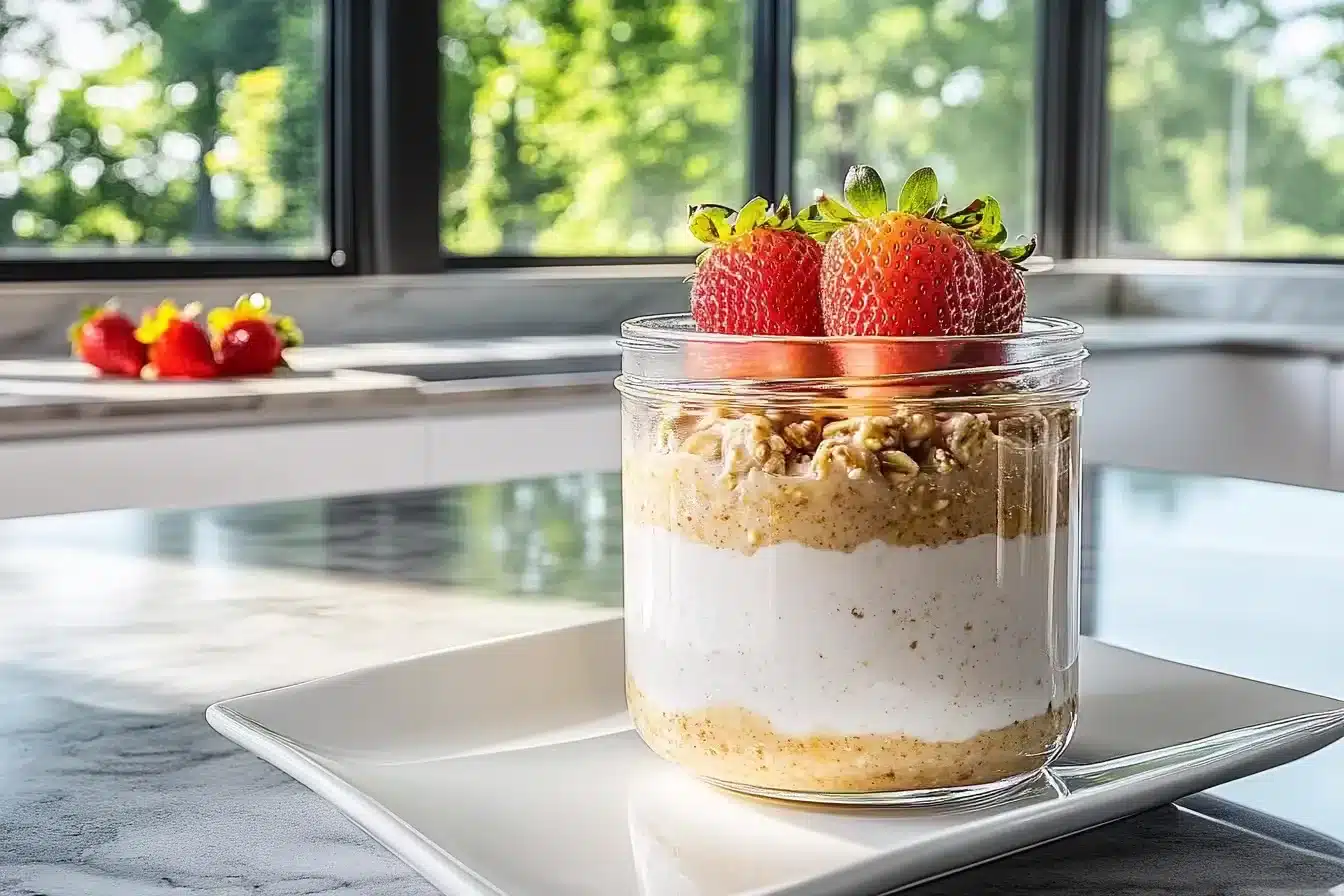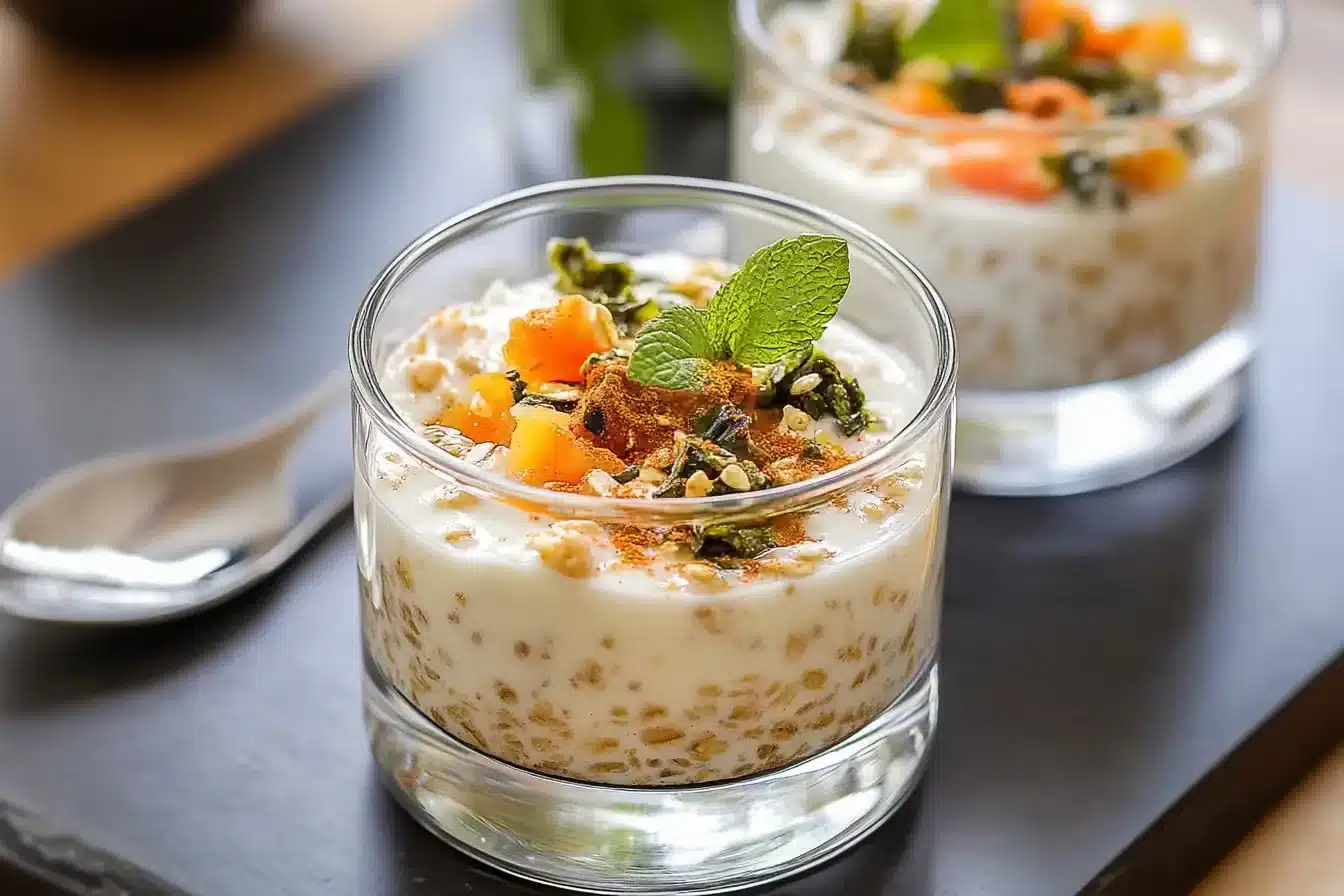
If you’re ready to take your overnight oats from basic to unbelievably smooth, these blueberry gelatin overnight oats are your new go-to. Unlike oats thickened with chia seeds or yogurt, gelatin creates a luxurious, spoonable texture that holds up beautifully for days. It’s not just creamy it’s dessert-level creamy, with a clean finish that lets the blueberry flavor shine.
This recipe started with a late-night shift and a fridge mistake that turned into a texture obsession. I’ve tested every method from cold bloom shake jars to precision melts and I’ll walk you through it all. Whether you’re here for gut-friendly collagen, meal-prep protein, or just a better bite, you’ll learn exactly how to bloom, dissolve, combine, and chill like a pro.
Why put gelatin in oats? If you hate the slimy texture of chia seeds or the tang of yogurt, gelatin is the secret weapon. It transforms ordinary oats into a silky, spoonable mousse (similar to Panna Cotta) that holds its shape perfectly for days.
You’ll also get vegan swaps like agar and silken tofu, so everyone has a path to creamy oats. If you’re a fan of unique textures, check out these chocolate blended oats or dive into something savory like miso overnight oats for contrast.
Why Gelatin Changes Overnight Oats Forever
A late-night fridge mix-up that changed everything
Years ago, during a long stretch of overnight hospital shifts, I grabbed a jar of oats I’d prepped half-asleep the night before. What I expected was the usual blend blueberries, oats, almond milk, maybe a spoonful of yogurt. But one bite in, I knew something was different. These weren’t just thick they were silky, scoopable, and cold-set like a chilled pudding. That’s when I realized I had accidentally used leftover bloomed gelatin instead of yogurt.
It was a total mistake, but the texture had me hooked.
I started testing it intentionally sometimes with hot bloom, other times in cold milk. I measured, chilled, and adjusted the gelatin ratios. I wanted that same creamy hold, without clumps or rubbery corners. The result is what you’re reading now: a perfected method for blueberry gelatin thickened oats that’s equal parts science and satisfaction.
This recipe now lives alongside my best base recipes like overnight oats with yogurt and our carrot cake overnight oats, but with one major upgrade gelatin locks in texture better than any other thickener I’ve used.

Why gelatin beats chia or yogurt for texture
Most overnight oats rely on chia seeds, yogurt, or nut butters to create thickness, but these all have limits. Chia adds a gel layer, but leaves a seedy texture. Yogurt adds creaminess, but the tang can overpower blueberries, and it separates after a couple days. Gelatin, however, works differently.
When you bloom gelatin, it forms a three-dimensional protein mesh that gently suspends water no grit, no separation. It holds a silky shape in the fridge for up to five days and feels more like a dessert mousse than a breakfast bowl.
Even better, it carries no flavor, so your blueberries, cinnamon, or lemon zest shine through untouched. This makes it perfect for delicate recipes like lemon cheesecake oats or custom flavor builds like blueberry-lavender or vanilla-almond.
I’ve broken this guide into two clear paths: a no-heat jar method for beginners and a bloom-precise method for texture purists. Whether you meal-prep for a family or build just one jar at a time, this technique fits right in.
Up next, we’ll break down your ingredients and substitutions, including gelatin types (porcine, bovine, fish) and the best vegan options like agar and silken tofu. Ready to build your texture toolkit?
Science of the Set: Gelatin vs. Chia vs. Yogurt
- Gelatin: Creates a 3D protein mesh for a smooth, firm “pudding” set. No grit.
- Chia Seeds: Creates a gel, but leaves a “tapioca-like” seedy texture.
- Yogurt: Adds creaminess but can separate and adds a sour tang.
Ingredients & Proven Substitutions for Blueberry Gelatin Overnight Oats

Blueberry Gelatin overnight Oats
Total Time: 15 minutes
Yield: 1 jar 1x
Description
These silky blueberry gelatin overnight oats use just the right amount of bloom to create a thick, spoonable texture with no seeds or yogurt needed. High in protein, customizable, and fridge-stable for 3 to 5 days.
Ingredients
Scale
½ cup rolled oats
½ cup milk of choice (dairy or unsweetened almond)
¼ cup fresh or frozen blueberries
¾ tsp powdered gelatin (200–250 bloom strength)
2 tbsp cold milk (for blooming)
1 tsp maple syrup or honey
Optional: ½ tsp vanilla, lemon zest, pinch of salt
Instructions
1. In a small bowl, bloom the gelatin in 2 tablespoons of cold milk. Let sit for 5 minutes.
2. Gently heat the bloomed mixture in a saucepan over low heat until fully dissolved (about 55–60°C). Do not boil.
3. In a separate bowl, combine oats, blueberries, maple syrup, vanilla, and salt.
4. Pour in the warm gelatin mixture and stir thoroughly to combine.
5. Transfer mixture to a jar, leaving ½ inch of headspace.
6. Chill uncovered for 30 minutes, then seal and refrigerate overnight (at least 6 hours).
7. Stir gently before serving. Add a splash of milk to loosen if needed.
Notes
Use gold sheet gelatin (1 sheet = ~2.5g) as a substitute if preferred.
For vegan version: Replace gelatin with ½ tsp agar, boil for 2 minutes, and follow same steps.
Avoid freezing; gelatin will lose its set and separate upon thawing.
- Prep Time: 10 minutes
- Cook Time: 5 minutes
- Category: Overnight Oats
- Method: No-Bake
- Cuisine: American
Nutrition
- Serving Size: 1 jar
- Calories: 260
- Sugar: 9g
- Sodium: 80mg
- Fat: 6g
- Saturated Fat: 1g
- Unsaturated Fat: 5g
- Trans Fat: 0g
- Carbohydrates: 34g
- Fiber: 4g
- Protein: 12g
- Cholesterol: 0mg
Understanding gelatin types and bloom strength
Not all gelatin is created equal. For thickening oats, the type and bloom strength of gelatin you use matters a lot more than you might expect. Bloom strength refers to how firm the gelatin sets. The most common options you’ll find are:
- Porcine gelatin: Usually 200–250 bloom. Neutral in flavor and widely available.
- Bovine gelatin: Often 225–250 bloom. Preferred by those who avoid pork.
- Fish gelatin: Pescatarian-friendly with a lower bloom (175–200). Slightly softer texture.
For overnight oats, a bloom range of 200–250 is ideal for creating a silky, spoonable texture that stays set for up to five days in the fridge. Anything below 200 will set too loosely unless you increase the quantity, which can lead to a rubbery feel.
A good starting point is 1% gelatin by total weight of the oat mixture. For a single serving (about 250g), this means using 2.5g of gelatin—roughly ¾ of a packet or just under 1 teaspoon. If using sheet gelatin, one gold sheet (~200 bloom) is ideal for 1 jar.
If you’ve tried thickeners like chia seeds in oats, you’ll notice a big textural difference. Gelatin blends smoothly without the grit, and it stays consistent from day one to day five.

Vegan alternatives that actually work
If you’re plant-based or just prefer a gelatin-free option, there are still great ways to enjoy this texture-forward breakfast.
1. Agar Agar: Derived from red algae, agar is the most common vegan substitute. It sets firmer than gelatin and requires heating. Use 0.5–0.7% by weight for a similar hold. Bloom it in liquid, boil gently for 2 minutes, then cool. Agar sets at room temperature but will hold better when chilled.
2. Locust Bean Gum (LBG): A lesser-known but excellent thickener when paired with agar. This combination mimics gelatin’s mouthfeel better than agar alone. Use 0.3% agar + 0.2% LBG per total weight for optimal texture.
3. Silken tofu: While not a gelling agent, silken tofu adds body and protein. Blending it with oats creates a mousse-like base with no need to heat. It’s the hero of our silken tofu oats and works beautifully with blueberries.
Below is a quick reference table for thickener swaps:
| Thickener | Amount per 250g oats | Prep Notes |
|---|---|---|
| Gelatin (bloomed) | 2.5g (¾ tsp) | Bloom in cold liquid, dissolve gently |
| Agar | 1.5g (½ tsp) | Boil for 2 mins, chill to set |
| Silken tofu | 75g (¼ cup) | Blend with oats, no cooking needed |
No matter which you choose, make sure to stir gently to avoid breaking the set, and allow at least 4–6 hours in the fridge for the texture to develop fully.
Step-by-Step: Bloom, Dissolve, Combine, Chill
The 2-minute no-heat jar method
If you’re short on time but still want that creamy texture, this method is your best friend. All you need is a jar, five minutes, and a quick shake. This method uses cold blooming plus a brief microwave burst to dissolve the gelatin directly in your oat mix.
Here’s how it works:
- In a clean jar, mix ¾ teaspoon of powdered gelatin with 2 tablespoons of cold milk or plant-based milk. Let it bloom for 5 minutes.
- Microwave for 10–15 seconds to dissolve. The liquid should be hot but not boiling.
- Stir to ensure the gelatin is fully dissolved (no clumps).
- Add the remaining ingredients: ½ cup oats, ½ cup milk, ¼ cup blueberries, sweetener of choice, and any add-ins.
- Shake or stir well, seal, and chill for at least 4 hours.
This method works especially well with recipes like our 3-ingredient overnight oats or overnight oats in a peanut butter jar, where speed and simplicity matter.
The jar method is perfect for meal preppers and anyone new to gelatin. You’ll get a softly set texture smoother than yogurt, firmer than chia, and beautifully balanced for spooning.
The precision method (for perfect texture)
If you want more control, especially when scaling up, this method gives you a consistent, silky result every time. It’s also ideal for batch prepping multiple jars at once.
Here’s how to get the perfect bloom and dissolve:
- Weigh your oat mix. For example, 250g total mix (oats + milk + fruit) requires 2.5g gelatin (1%).
- Sprinkle gelatin over room temperature liquid (not boiling or hot). Let bloom for 5–7 minutes.
- Warm gently in a saucepan over low heat to 55–60°C (130–140°F), stirring constantly until dissolved. Never boil.
- Combine this liquid with oats, fruit, and flavorings. Stir well to distribute.
- Pour into jars, leaving ½ inch of headspace to account for set.
- Chill uncovered for 30 minutes, then seal. Total chill time: 6+ hours for best texture.
This method gives a firmer set and is ideal for layered jars (like blueberry on bottom, lemon cream on top), or dessert-style variations like our blueberry cheesecake overnight oats or tiramisu overnight oats with protein.
It’s also the better route for using agar or fish gelatin, which set more delicately. If using agar, be sure to boil briefly, then cool before mixing with oats.
Both methods work pick based on your time, tools, and how much texture control you want.
Troubleshooting and Storage Tips for Blueberry Gelatin Overnight Oats
Fixing common problems (clumps, rubbery texture, loose set)
Even with a great method, overnight oats can go sideways if your thickener isn’t handled properly. Here’s how to fix the most common issues with blueberry gelatin overnight oats all tested first-hand in my kitchen.
Clumps in the jar: This usually happens when the gelatin isn’t fully dissolved before mixing. To fix it:
- Always bloom gelatin in cold or room-temp liquid first (never straight into hot).
- Stir or swirl thoroughly after microwaving or heating until the liquid looks fully clear.
- For best results, strain the gelatin mixture through a fine sieve before adding to oats.
Rubbery texture: If your oats set too firm and bounce back like Jello, you likely used too much gelatin or allowed it to boil. Stick to 1% gelatin by total mixture weight and always heat gently never let the liquid bubble.
Too loose or runny: This can happen with low-bloom gelatin or not enough chill time. Try increasing gelatin slightly or using a higher-bloom brand. And be sure your jars get at least 6 hours in the fridge, especially for layered or larger servings.
Separation in the fridge: Stir oats after the first 30 minutes of chilling to redistribute the fruit and liquid. This is especially helpful in recipes that include blended fruit or high water-content ingredients.
For more on oat-setting mistakes, check out common errors beginners make with overnight oats.

Storage, food safety, and prep-ahead guidance
Once your oats are thickened and chilled, you can store them safely for several days but a few tips will help preserve taste and texture.
Refrigeration: Always store in a sealed container or lidded jar. Gelatin-thickened oats keep well for 3 to 5 days, depending on added ingredients. Use glass containers when possible for the best set.
Freezing: Not recommended. Freezing causes gelatin to lose structure and release water upon thawing. Stick with fridge storage for optimal texture.
Portioning: For weekly meal prep, make 3 jars at a time. Any more and the fruit may start to break down. This is especially true with thawed frozen blueberries or blended ingredients.
Fridge math: Wondering how long your jars really last? Here’s a quick rule of thumb:
- Plain gelatin oats (no fruit): 5 days
- Oats with fresh fruit: 3–4 days
- Oats with blended fruit or dairy: 2–3 days max
For more food safety tips, see our guide on how long overnight oats really last in the fridge. That resource includes signs of spoilage and best containers to use.
Bonus tip: If the top layer dries out slightly, just stir in a splash of milk before serving to refresh the texture.
Flavor Variations: From Cheesecake to PB-Blueberry
Blueberry cheesecake oats (classic & high-protein)
For a truly indulgent version of blueberry gelatin overnight oats, try turning them into a blueberry cheesecake jar. Here’s how:
- Add 1 tablespoon cream cheese (or dairy-free cream cheese) during mixing.
- Mix in ½ teaspoon vanilla and a pinch of cinnamon.
- Top with crushed graham cracker or toasted oats before serving.
This flavor combo is rich, balanced, and holds beautifully for 3 days. If you want more protein, blend in 1–2 teaspoons collagen peptides they dissolve without affecting the set.
Want to try another dessert-style variation? Our tiramisu pro oats use a similar structure and can be easily adapted with blueberries for a berry-twist take.
Lemon-blueberry, vanilla almond, and PB-blueberry
Lemon-blueberry:
Add ½ teaspoon fresh lemon zest to the base and a splash of lemon juice before serving. Use mild honey or maple syrup as a sweetener.
Vanilla almond:
Use almond milk, ½ teaspoon vanilla extract, and a sprinkle of sliced almonds for crunch. Pair this with a few frozen blueberries to contrast the creaminess.
Peanut butter blueberry:
Add 1 tablespoon natural peanut butter while still warm so it blends smoothly. This variation is rich in flavor and great with a collagen boost.
If you like experimental flavor combos, our cottage cheese banana bread oats also blend texture and bold flavor just like these.
These variations can all follow the same gelatin base formula. Use your preferred bloom method, chill time, and storage window to match the flavor profile.

Nutrition & Macros: How Gelatin Changes the Game
Adding gelatin doesn’t just help with texture it contributes additional collagen protein that boosts the macros without adding bulk or sugar.
Here’s a typical macro breakdown per jar (based on a 250g serving with milk, oats, blueberries, and ¾ tsp gelatin):
| Component | Grams per Serving |
|---|---|
| Calories | 230–270 |
| Protein | 10–14g |
| Fat | 4–8g |
| Carbs | 30–35g |
| Sugar (natural only) | 6–10g |
Compared to chia or yogurt-based versions, gelatin offers a higher protein-to-carb ratio without adding dairy, seeds, or flavor interference. You can boost this further with protein powder, nut butters, or a layer of high-protein blended oats, like in our blended overnight oats recipe.
FAQs About Blueberry Gelatin Overnight Oats
Is this the same as collagen oats?
Similar, but better for texture. Collagen peptides dissolve fully but don’t thicken. Gelatin is cooked collagen that gels when cooled, giving you both the gut-health benefits AND the thick, creamy texture.
What type of gelatin works best for oats?
Use powdered bovine or porcine gelatin with a bloom strength between 200 and 250. This gives a creamy set that isn’t rubbery. For pescatarian options, fish gelatin works too, though it sets slightly softer. You can also use sheet gelatin 1 gold sheet per jar is ideal.
Can I make this recipe vegan?
Yes. Replace gelatin with agar powder or a silken tofu base. Agar must be boiled briefly before mixing and will create a firmer set. Silken tofu provides a creamy mousse texture when blended with oats and is a great dairy-free protein boost.
Can I freeze gelatin oats?
No. Freezing breaks the gelatin’s protein network, causing separation and weeping once thawed. It’s best to store in the fridge and enjoy within 3 to 5 days. For make-ahead, prep 2–3 jars at a time and rotate flavors to avoid boredom.
Conclusion :
Blueberry gelatin overnight oats offer more than just a fresh way to prep breakfast they bring together texture, protein, and flavor in a way most oat recipes simply can’t. Whether you prefer the quick jar method or the more precise bloom-and-stir approach, this guide gives you every tool you need to master the process. From choosing the right gelatin type to troubleshooting texture or trying vegan swaps like agar and silken tofu, you’ve got complete control.
These oats are ideal for meal prep, busy mornings, and flavor experimentation. Start simple, then branch into layered flavors like blueberry cheesecake, lemon almond, or peanut butter swirl. And if you’re new to prepping oats, our classic overnight oats guide is a great place to start building your skills.
The best part? One base recipe, endless variations. Every creamy jar you make is a chance to try something new and nourish your body while doing it.
So grab your favorite jar, bloom your gelatin, and let the chill time do the magic. Your morning routine just got easier, smoother, and a whole lot more delicious.
You May Also Like
If you love creamy, fruit-forward overnight oats, you’ll want to explore these delicious variations: try the bright and tangy Lemon Blueberry Cheesecake Overnight Oats for a dessert-inspired twist, or go nutty and satisfying with the Blueberry Almond Overnight Oats Recipe. For a lighter option that still delivers on flavor, the Low Calorie Overnight Oats for Weight Loss is a perfect next jar to prep.